
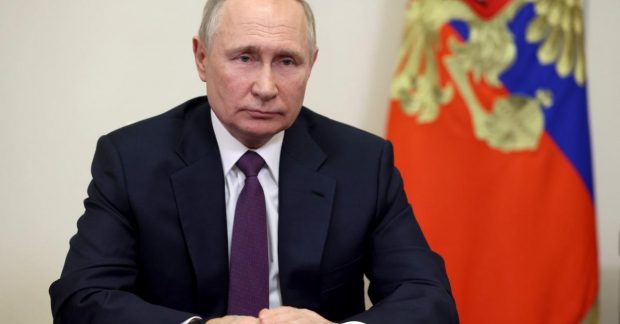
Negotiations between Ukraine, the United States, and Russia scheduled in Abu Dhabi are unlikely to bring significant progress toward ending the war. This is noted by John E. Herbst, former U.S. ambassador to Ukraine, in his analytical article for the Atlantic Council. He points out that for Russian President Vladimir Putin, the process of negotiations is more important than the outcome itself. This allows him to slow down the intensification of pressure from Donald Trump and simultaneously weaken Western support for Kyiv.
Herbst emphasizes the Kremlin’s unchanging goal—to establish political control over Ukraine. To achieve this, Russia is trying to weaken Western, and above all U.S., support for Ukraine. At the same time, Putin’s position contradicts Trump’s desire for a stable peace in which Ukraine would remain a sovereign and protected state.
According to Herbst, Putin gains an advantage in the negotiations thanks to Trump’s special attitude. The U.S. leader shows rare respect for Putin, which is why he does not increase pressure on Moscow despite the numerous proposals to end hostilities that he has put forward since spring 2025. Meanwhile, Ukrainian President Volodymyr Zelenskyy is said to have agreed to all six proposed options, whereas the Kremlin rejected each of them. Among them was the latest peace plan, delivered by U.S. Special Envoy Steve Witkoff in St. Petersburg last October.
Herbst pays particular attention to the Trump administration’s decisions that make it easier for Russia to continue its aggression and complicate Ukraine’s defense. These include the resumption of Russian diesel fuel supplies to the United States, the lifting of sanctions in Senator Lindsey Graham’s new bill, the suspension of intelligence data transmission to Ukraine via the Starlink and Starshield satellite systems, and consideration of Putin’s proposal for a trilateral summit involving the United States and China. The Kremlin welcomed these actions enthusiastically, yet made no concessions for peace.
After Putin refused to accept Witkoff’s peace proposals in Moscow, he agreed to a trilateral working meeting in Abu Dhabi, which was a step toward Washington. However, Russian Foreign Minister Sergei Lavrov has already stated that Moscow is not ready to change its conditions. The appointment of Vladimir Medinsky as head of the Russian delegation indicates, according to Herbst, the Kremlin’s lack of serious readiness for compromises. Medinsky has participated in most past negotiations with Ukraine since March 2022, yet no agreements have been reached.
The former diplomat also drew attention to the possible mediation of U.S. First Lady Melania Trump, particularly regarding the evacuation of Ukrainians from Oleshky in Kherson Oblast. According to Herbst, Russian troops there have caused a humanitarian crisis by blocking the supply of food, fuel, and medicine. After the international community drew attention to the issue, the Kremlin had to respond. Melania Trump’s involvement in this process helped bring the resolution of the humanitarian problem created by Russia into the public sphere, giving the U.S. First Lady a prominent role.
Regarding the negotiation format, Herbst notes a shift in focus in U.S. preparations. After Putin’s refusal to accept Witkoff’s proposals, the Trump administration appears to have concentrated on developing a new European security architecture that could be accepted by all parties. U.S. Special Envoys Steve Witkoff and Jared Kushner visited Brussels on Thursday to discuss this plan with representatives of Ukraine and Europe. NATO is assigned a special role in this initiative.
However, Moscow did not support the proposed security model. In particular, Putin’s foreign policy adviser Yuri Ushakov stated that the Kremlin considers the new system acceptable only if the former Warsaw Pact countries and the Baltic states withdraw from NATO. Herbst notes that such a demand is unlikely to align with U.S. interests and will not contribute to stability in Europe.
In conclusion, the former ambassador emphasizes that there are still no signs of a change in the basic dynamics of the negotiations. Putin continues to reject positions that contradict his demands, while the Trump administration limits itself to symbolic steps instead of real pressure on Moscow. Herbst warns: if the United States continues to ease pressure on Russia, it will only strengthen Putin’s position, which will delay the end of the war or even intensify the conflict.
The trilateral meeting of the Ukrainian, American, and Russian delegations is scheduled for November 10–11 in Abu Dhabi, the capital of the United Arab Emirates. U.S. Special Envoy Steve Witkoff previously stated that the talks would discuss steps toward peace. According to Channel 8, the Ukrainian delegation will be led by the head of the Presidential Office, Kyrylo Budanov.
The Russian side also announced the composition of its delegation, which will include high-ranking officials from diplomatic and military structures, among them Kremlin aide Vladimir Medinsky and head of Russian military intelligence Igor Kostyukov.

