
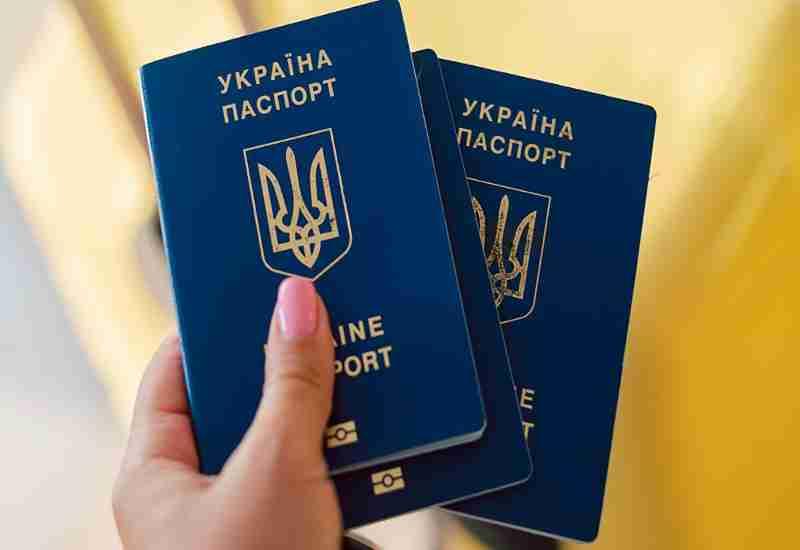
Myth: “A foreign passport will do instead of the internal one — and they will give a loan”. Reality: essentially, no. According to our observations, in more than 90% of cases Ukrainian banks and most microfinance organizations reject applications if there is only a foreign passport. Here’s a short and practical explanation why.

Why do banks specifically need the internal passport?
In short: the internal passport provides the full set of data needed for identification and legal operations within the country. It contains the series, number, and place of registration (propiska) — the details banks use to check the client’s solvency, connections, and legal responsibility. Secondly, it serves as a convenient base for automated queries to registries and credit bureaus.
What is important to know: banks operate under KYC (know-your-customer) and AML (anti-money laundering) rules. These procedures require confirmation of permanent residence and a reliable identifier — the internal passport is simpler and legally justified in this sense.
Is it realistic to get a loan with only a foreign passport?
The short answer is practically no. Essentially, the foreign passport is intended for crossing borders, not for domestic financial transactions in Ukraine.
Legal aspect: legislation and internal regulations of financial institutions treat the foreign passport as a document that confirms identity outside the country. Banking systems, payment gateways, and state registries are synchronized around the internal passport, so using the “foreign passport alone” as a substitute is technically and legally inconvenient.
Micro-case: in 2024, client A tried to apply for an online loan using only a foreign passport. Result: the application was rejected at the automated verification stage — missing registration data and inability to connect through local registries.
Civil passport vs. foreign passport: what’s the difference
Both documents confirm identity. But their purpose is different. The internal one is a legal tool for domestic relations; the foreign one is a travel document. That’s it. What this means for the borrower: if you want to simplify access to loans and reduce the risk of rejection — having an internal passport in order is critical.
Legal restrictions and banking practice
Banks refer to internal regulations and national client identification standards. They also use queries to the State Registry, credit bureaus, and sometimes the tax office. A foreign passport does not always allow responses from these sources, so institutions require the internal document for a full check.
Exceptions may exist in cases of private lending or with some foreign banks that have a local branch. However, these are isolated cases rather than the rule.

Which documents to prepare: practical guide (5 steps)
Step 1. Ukrainian citizen passport — the foundation. Even for online applications. Why: banks instantly check the series/number in state registries.
Step 2. Tax ID (individual tax number). Required for tax checks and access to credit history.
Step 3. Proof of income (2-PIT certificate or pension fund statement). For banks, this is a tool to assess solvency; for MFIs, it is often not mandatory.
Step 4. Additional documents if needed: collateral documents, power of attorney (if acting through a representative), or marriage/birth certificates — when additional context regarding financial obligations is required.
Step 5. Online alternative: for microloans, a passport and tax ID are usually sufficient. This is convenient and fast (suddenly — 10–30 minutes in 2024). But the interest rate and fees at MFIs will be higher compared to a bank loan.
Quick tips and counterintuitive observations
1) If you only have a foreign passport and plan regular financial transactions in Ukraine — it is worth obtaining or restoring the internal document (the urgent procedure at the Ministry of Internal Affairs usually takes 20–30 business days, with expedited options available).
2) An online application to an MFI solves the problem quickly, but does not save on checks: scoring systems still look at the tax ID and databases. Essentially, time savings are offset by a higher loan cost.
3) Alternative for those living abroad: look for banks with international programs or financial platforms that work with non-residents — but there will be different rules and additional documents (for example, proof of residence abroad).
What’s interesting: in 2023–2024, some fintech services experimented with alternative identification (biometrics, video verification). This is not yet a widespread practice in large banks, but we will likely see wider adoption in the next 2–3 years.
Summary without clichés: if you need a quick loan — a microloan with a passport and tax ID will solve the issue. If you plan longer or larger financial obligations — take care of your internal passport and the full set of documents. Sometimes it may be possible to negotiate with a private lender or a foreign branch, but this is the exception. Are you ready to check your document set right now?

