
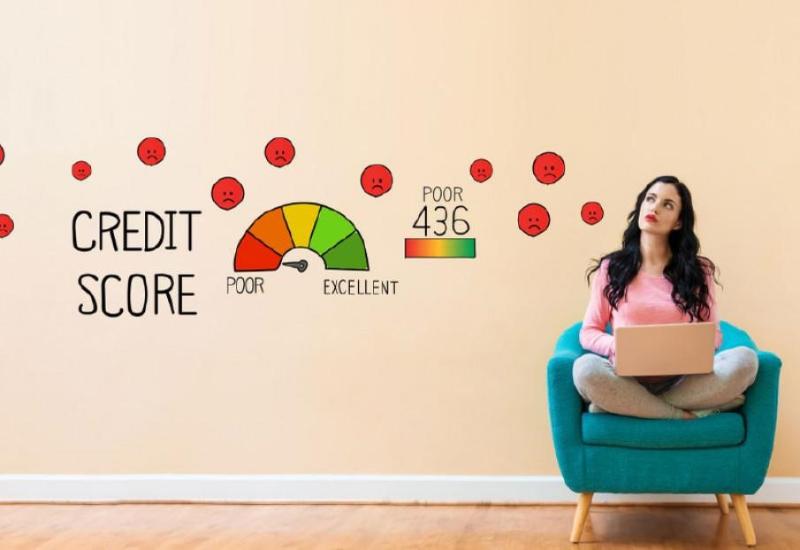
Your utility payments can affect your chances of getting a mortgage. You don’t hear this often, but it’s true: your credit history is not just a list of bank loans.

What is a credit history, essentially?
A credit profile is a digital dossier of your financial behavior: loans, payment deadlines, delinquencies, creditor inquiries, and sometimes fines and court decisions. Essentially, it’s a scoring matrix and chronology of interactions with creditors collected in registries.
Today, other data are added to financial signals: utility payments, information from mobile operators, data on deferrals and restructurings. Such an expanded approach is used by major credit bureaus and banks: they look not only at the amount of debt, but also at the pattern of your payment behavior.
Key elements of a credit dossier
- history of credit contracts (amount, term, product type);
- payment discipline for each obligation — timely/overdue payments;
- registration of delinquencies, arrests or court decisions;
- applications to the bureau and creditor inquiries (number and frequency).
Profile gradations
There are three conditional states: positive (high reliability), neutral (lack of history) and negative (systematic delinquencies). Neutral status is a kind of hidden pitfall: banks do not see risks, but they also do not see confirmation of reliability.
According to our observations, the absence of history sometimes complicates obtaining a loan more than a weak positive history — because the bank needs a forecast of your behavior.
How to check your credit reputation? — step by step
Start with specifics: where to go and how much it costs.
Where to go
Request a report from national registries — UBKI (Ukrainian Bureau of Credit Histories) or PVBKI (Public All-Ukrainian Bureau of Credit Histories). These two structures accumulate the main data array in the country. Other bureaus exist, but, as a rule, they have a smaller volume of information and serve as an additional source.
Procedure and timelines
- Once a year, the report is free, guaranteed by law (as of 2024–2025);
- repeat reports may cost ≈50 UAH (guideline);
- online application processing — from several hours to 48 hours, sometimes up to 2 weeks, in special cases — up to 60 days.
Keep in mind: the data update period depends on the creditor and the bureau — sometimes records are adjusted quickly, but sometimes changes “enter” the registry with a delay.
Why can the status worsen? (briefly)
The most common reasons are payment delinquencies, closed court cases, non-repayment of microloans, bankruptcy or frequent loan applications without real need. The scheme is simple: the more negative signals — the lower the rating.
Counterintuitive observation
It may seem that a small microloan is a punishment. No. If you take it and repay it on time, you will get a positive “link” in your history: scoring reacts not only to debts, but also to the sequence of payments.
How to restore reputation: practical instructions
There is a clear sequence of actions. They must be performed systematically. Here is a plan that works in most cases (according to our observations, improvements are noticeable after 3–6 months with regular payments).
- Verification. Get a full report from UBKI/PVBKI — identify errors and duplicate entries.
- Correction. Contact the creditor with a request to correct the error — use written statements; the bureau must respond within legal deadlines (often 30–60 days).
- Repayment of small debts. Close debts up to 30% of the total amount — this gives a noticeable effect on scoring.
- Credit load control. Keep credit load below 30% (this indicator is an industry benchmark for credit utilization).
- Planned new borrowing. A small loan or credit card with on-time repayment will help create positive records.
- Payment automation. Set up autopayments — banks value this because the risk of a missed payment decreases.
Why does this work? Because scoring models (scoring is an industry term denoting a risk assessment algorithm) evaluate not only the presence of debt, but also the trend of behavior: regular timely payments form a pattern of solvency.
Micro-cases
Case 1. Olena, 29 years old. Had a credit card delinquency from 2021. Paid off the balance in 2024, added 6 on-time payments — her scoring rose from “low” to “above average” in 5 months.
Case 2. Mykyta took a microloan in 2023 for household needs and paid it on time. After 4 months, banks began to look more positively at his applications — an example of how a small loan works for reputation.
Data retention period and record updates
By law, information is stored for up to 10 years — this is a guideline to keep in mind. Records are automatically deleted after the retention period expires, but the rating recovery process may take longer: 1–2 years of stable payments are sometimes needed to completely change the borrower’s image.
Record updates in the bureau usually occur within 2 weeks to 60 days — depending on the creditor’s internal procedure and the bureau’s technical deadlines.
A few warnings
You may be offered quick “cleaning” schemes for your history — beware. Often such offers include unnecessary expenses or fraud risks. It is better to act through official appeals to creditors and bureaus.
Occasionally, you may have to negotiate restructuring with creditors — this is not weakness, but a risk management tool. Banks also win when they receive at least partial repayments instead of full default.
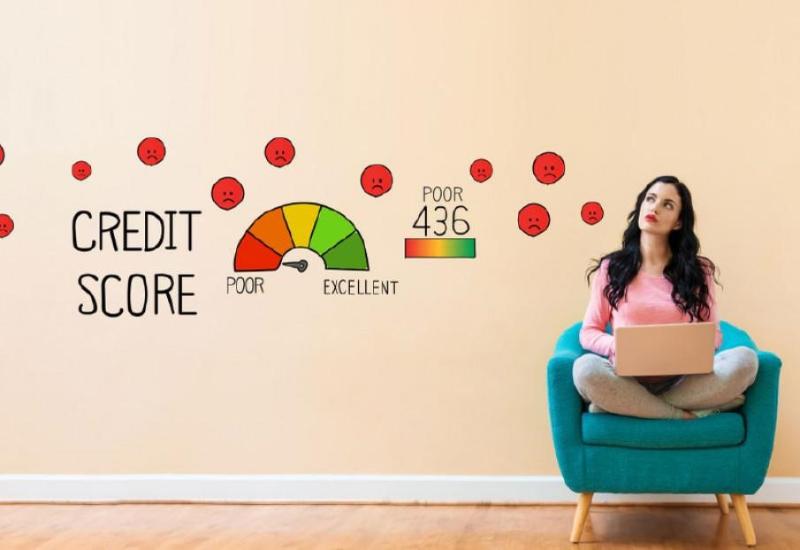
Summary? Credit history is work, not a one-time action. Regularity, transparency and small but stable steps yield results. If you want — start simple: get a report, find 1–2 errors, close the smallest debts and set up autopayments. In six months, it seems, you will notice a tangible difference.

