
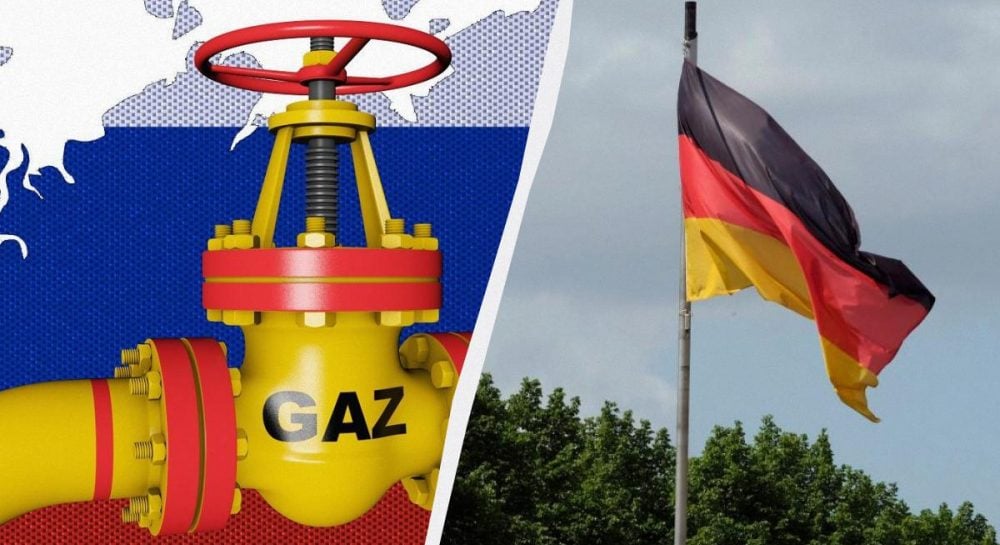
The German federal government has stated that the issue of launching the Russian Nord Stream 2 gas pipeline is not currently under consideration. This became known from the official response of the federal government to a request from deputies of the Alternative for Germany party, published on the Bundestag website.
The document emphasizes that the commissioning of the Nord Stream 2 pipeline is not a priority for the government, and the certification of this facility remains blocked. In addition, the response noted that after the start of Russia’s full-scale war against Ukraine, Moscow gradually restricted natural gas supplies to Germany.
Throughout 2022, for political reasons, the volumes of Russian gas transported through pipelines decreased significantly. Immediately before the sabotage of the pipelines in September, supplies were completely stopped. The German federal government considers such actions to be evidence of Russia’s unreliability as an energy supplier. The document states: “Russia has demonstrated that it cannot be a reliable partner in the energy sector.”
At the same time, the government emphasizes that the Russian Federation’s revenues from the export of energy resources are used to finance its aggression against Ukraine. Given this, the European Union has imposed large-scale sanctions against the Russian energy sector. Under the REPowerEU initiative, the EU aims to gradually end its dependence on Russian energy carriers.
Berlin fully supports this policy and is in solidarity with the sanctions that temporarily block the operation of the Nord Stream pipelines. They were included in the 18th package of EU restrictions approved in July 2025.
Recall that earlier there were reports of possible negotiations between Washington and the Kremlin regarding the resumption of the Nord Stream pipeline. Back in February, Channel 8 reported on secret consultations between representatives of Russia and the United States, which discussed the option of resuming gas supplies with the support of the American side.
In October, details of high-level negotiations became known, involving Russian President Vladimir Putin’s advisor Kirill Dmitriev and former US President Donald Trump’s son-in-law Jared Kushner. The possibility of attracting American investors to the Nord Stream project was discussed.
Kushner, who seeks to promote a peaceful resolution of the conflict between Russia and Ukraine, believes that business can play a key role in establishing a ceasefire. Such an agreement could also bring profits to American investors from future energy supplies to Europe after the war.
However, there are major obstacles to this path. According to the Spanish publication ABC, the sale of the controlling company of the Nord Stream pipelines to American investors or the resumption of Russian gas supplies is unlikely. In particular, 31% of the company’s shares belong to two German companies, and among the co-owners are French and Dutch companies.
Thus, despite diplomatic efforts and possible agreements, the prospects for resuming the operation of Nord Stream 2 remain in doubt, and the German government’s decision directly reflects its position on security and energy policy amid the ongoing war in Ukraine.

