
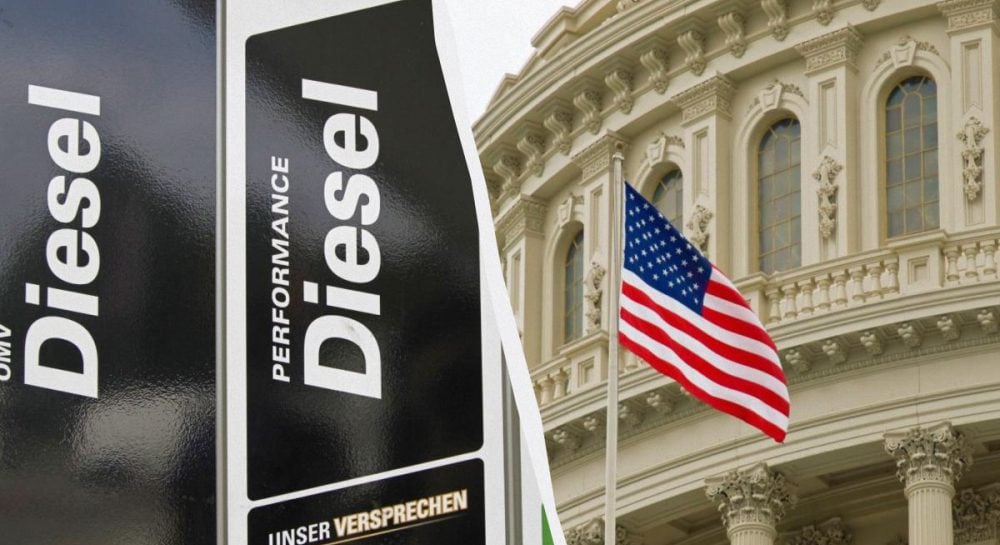
Average fuel prices in the US during Donald Trump’s second presidential term have almost reached record levels in the country’s history. Diesel prices have risen especially sharply, reports Financial Times via Channel 8.
By early November 2026, the average cost of diesel fuel in the US rose approximately 70% compared to last year, reaching about $6.30 per gallon ($1.66 per liter). This figure is only slightly below the historic record of $6.53 per gallon ($1.73 per liter), set in September 2026.
For comparison, during the current administration the average diesel price is $4.339 per gallon ($1.15 per liter), whereas under Joe Biden it was $4.076 per gallon ($1.08 per liter).
As for gasoline, the average price in early November reached about $4.20 per gallon ($1.11 per liter). With Trump’s return to power, gasoline prices have risen by more than a third. However, they have not yet exceeded the record high of $5.02 per gallon ($1.33 per liter) observed during Biden’s presidency after Russia’s full-scale invasion of Ukraine in 2022.
Forecasts indicate that the average price per gallon of gasoline during Trump’s second term will exceed $3.46 ($0.91–$0.92 per liter), setting a new record higher than the highs of the Biden presidency.
The rise in energy costs has accelerated inflation in the US: the personal consumption expenditures price index in September rose to 3.6%, compared to 2.6% at the start of Trump’s term.
According to polls, 56% of Americans believe their financial situation has worsened. Economic dissatisfaction creates additional challenges for Republican Party candidates ahead of the November 3 midterm elections to the House of Representatives and Senate, even in traditionally Republican states.
One of the key factors behind the sharp rise in fuel prices was the US military operation against Iran, which began in February 2026. In response, Tehran blocked tanker traffic through the Strait of Hormuz. In addition, strikes on oil refineries in the Middle East, as well as the consequences of Ukraine’s attacks on Russian refineries, have further complicated the situation on the global fuel market.
Donald Trump emphasizes that the military operation against Iran was necessary to curb its nuclear program, and that after the end of hostilities fuel prices will begin to fall. Administration officials also stress that, taking into account inflation during Biden’s presidency, fuel costs were even higher.
In response to the price increase, the Trump administration has introduced a number of emergency measures. In particular, environmental and logistical restrictions in the US have been eased, and governors have been asked to temporarily suspend local excise taxes on gasoline and diesel.
The most radical step was the temporary lifting of sanctions on imports of Russian diesel fuel. Under the agreements, the first phase involves supplying 300,000 tons of diesel to the US and international markets. In November 2026, volumes will increase by 500,000 tons, and in subsequent phases an additional million tons will be included in the plan.
However, experts doubt that such deliveries will significantly affect price stabilization. In addition, import volumes are limited due to damage to Russian oil refineries.
Additionally, American dissatisfaction has been fueled by the financial results of oil corporations Exxon and Chevron, which posted an almost record quarterly profit of $25.3 billion.
Furthermore, the environmental organization Greenpeace has identified seven tankers carrying about 288,000 tons of Russian diesel for further supply to the US market. Delivery of this diesel is accompanied by heightened secrecy. Previously, Russian President Vladimir Putin signed a decree limiting the disclosure of information about oil and other energy exports.
One of the main risks to fulfilling the agreements is possible strikes on Russian oil refineries. Ukraine had previously temporarily suspended attacks on these facilities due to pressure from the Trump administration. At the same time, as The Wall Street Journal notes, after the midterm elections in the US, Kyiv may resume intensive strikes.

