
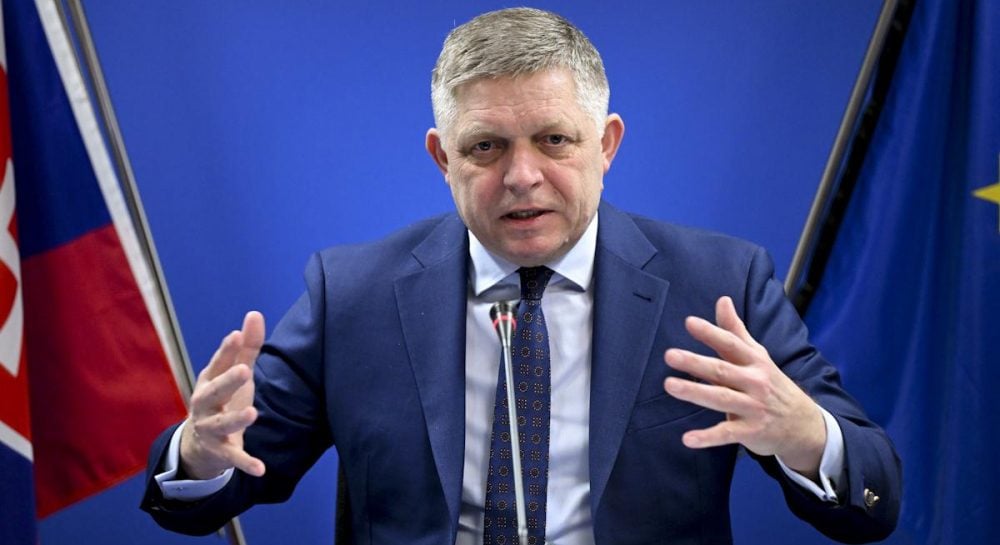
Slovak Prime Minister Robert Fico accused German Chancellor Friedrich Merz of blackmail over his proposal to link approval of the new long-term EU budget with financial support for Ukraine. This position was presented in defiance by four EU countries at once – Slovakia, the Czech Republic, Hungary, and Bulgaria.
As reported by 8 channel citing Euronews, Fico called Merz’s actions “a classic example of blackmail” and threatened to use the right of veto. During a meeting in Bratislava with Czech Prime Minister Andrej Babiš, he noted:
“In this process, we have equal voting rights. If the Federal Chancellor of Germany can use the right of veto, then we have the same opportunity.”
The Czech Prime Minister, in turn, noted that the EU budget draft already provides for 100 billion euros for support of Ukraine, but these funds will only become available from 2028. However, in 2027, Kyiv may face a shortfall of approximately 70 billion euros.
Fico emphasized that Slovakia is a sovereign state and will not accept blackmail:
“What the Federal Chancellor is doing is nothing but blackmail, and I categorically reject it.”
In turn, Friedrich Merz, intensifying pressure on partners, stated in a letter to European Council President António Costa that providing new assistance to Ukraine is a “mandatory condition” for approving the next budget.
The European Union has promised to compensate approximately two-thirds of Ukraine’s budget deficit amounting to about 45 billion euros. However, the mechanism for implementing these investments has not yet been specified. Among possible options for rapid financing, new joint EU borrowing is being considered.
This will complement the already approved loan of 90 billion euros, which will be provided to support Ukraine. At the same time, Slovakia, the Czech Republic, and Hungary were exempted from participation in this loan.
Bulgarian Prime Minister Rumen Radev also stated that due to the high budget deficit, the country has the right to be exempted from future credit obligations regarding Ukraine. At the same time, he confirmed that Bulgaria will continue to support Kyiv in other ways, in particular through the supply of energy resources.
“Bulgaria does not block decisions adopted at the EU Council level that are taken by general agreement, as everyone wants to help Ukraine within their capabilities,” Radev emphasized.
Earlier, German Chancellor Friedrich Merz warned about the possibility of blocking the EU budget for 2028–2034 if member states do not agree to finance Ukraine in 2027 and beyond.
Merz emphasized that in 2027, Ukraine faces a funding shortfall of 70 billion euros. He also advocates for decisions on support for Ukraine to be taken by qualified majority rather than by consensus.
In the absence of alternatives, the EU’s total debt in connection with supporting Ukraine could exceed 200 billion euros. As estimated by WELT AM SONNTAG, Brussels will likely have to provide Kyiv with an additional more than 40 billion euros – in addition to the already allocated 166 billion – through joint borrowing.
This is reported by 8 channel.

