
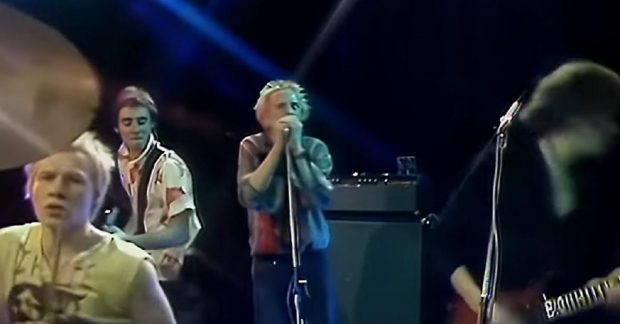
Fifty years ago, a breakthrough occurred in the world of music in the United Kingdom — the band Sex Pistols released the track “Anarchy in the UK,” which became a revolutionary manifesto of punk rock. This genre, which emerged against the backdrop of a deep economic crisis and social discontent in the 1970s, overturned the established rules of the music industry, opening the scene to young amateurs and turning songs into a powerful tool of social protest.
Punk rock originated in the United Kingdom in the mid-1970s, when the country was going through a difficult period of rising unemployment and social tension among young people. This style was characterized by its simplicity in music, aggressive performance, provocative image, and lyrics aimed against the political and social status quo, as well as for the rights and freedom of the individual, reports 8 channel.
Sex Pistols quickly became a symbol of the new musical movement. The group gained particular fame after an incident in December 1976, when its members gave an interview using profanity on British television, which led to a harsh reaction from the press. This scandal significantly increased the band’s popularity, making them one of the most prominent and controversial phenomena on the music scene at that time.
Cultural critic Kevin Dettmar notes that bands like Sex Pistols, Ramones, and The Clash “broke down the doors” into the music industry, destroying traditional barriers and formats. Punk rock was radically different from the expensive and complex-sounding stadium rock that dominated the 1970s.
For musicians of the new generation, there was no need to own expensive instruments or attend serious music schools. The main idea was that almost anyone with desire and inner drive could create a band.
This musical style harshly reflected the social challenges of that time: economic difficulties, unemployment, lack of prospects for young people. It was precisely these problems that filled the lyrics of punk compositions.
The song “Anarchy in the UK” became an anthem of youth protest directed against British authorities and the establishment. Later, the band The Clash actively continued the traditions of socio-political discourse in their works. Their songs addressed themes of unemployment, racial discrimination, police lawlessness, and class inequality. The track “London Calling” is an alarming call that touched on political and environmental issues of the late 1970s.
Earlier, 8 channel reported that one of the iconic songs of the early 1970s did not immediately reach the top of the charts after its release, but later became an immortal rock anthem, winning the hearts of many generations of listeners.

