
Russian energy company Novatek, which is under partial U.S. sanctions, may have secretly invested in the American project Polar LNG — a company planning to develop and export liquefied natural gas (LNG) from the territory of Alaska. Such data is contained in an investigation by The New York Times, which is based on documents, correspondence, and testimonies of former project leaders.
This issue was discussed against the backdrop of contacts between the administration of former U.S. President Donald Trump and the Kremlin, aimed at finding ways to resolve the war in Ukraine. According to the publication, Russian President Vladimir Putin raised the topic of possible connections between Novatek and Polar LNG during meetings with Trump’s special representatives — Steve Witkoff and Jared Kushner. At the same time, no evidence was found of U.S. officials’ awareness of these connections.
Joel Riddle, the former CEO of Polar LNG who left the position in September, initially believed that the project was financed through a company from the United Arab Emirates. However, he later learned about the possible direct participation of the Russian Novatek in financing. Legal documents prepared by the law firm Baker Botts also highlight concerns of U.S. officials regarding possible sanctions violations.
In his statement, Riddle emphasized: “This not only violates the law, but also contradicts the national interests of the United States, because Russian technologies will control the commercial operation of Arctic gas on the northern coast of Alaska.”
According to The New York Times, at the end of August, negotiations were held in Abu Dhabi between representatives of Polar LNG, its parent company Tech Wave Industrial Projects Management, and the management of Novatek. Russian managers discussed the possibility of providing funding of up to 15 million dollars to support the American project. In early September, Denis Solovyov, deputy head of Novatek, sent a letter to Riddle stating: “All decisions were made during the meeting in Abu Dhabi. The first 5 million should arrive today.”
Shortly after this, Riddle, together with two other senior Polar LNG employees, left the company. They contacted the U.S. government requesting an investigation into the suspected Russian funding of the project. Polar LNG itself reported dissatisfaction from one of the employees and stated that it was conducting an internal investigation into the claims made. Novatek, meanwhile, announced its intention to obtain the status of a minority shareholder in the project.
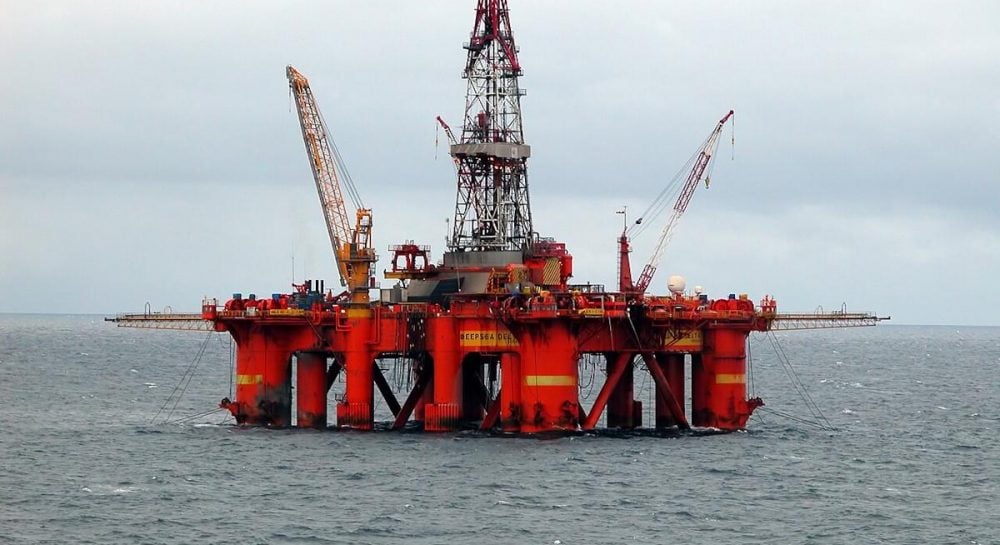
The idea involves the construction of a large offshore platform off the coast of Alaska for liquefying gas — a byproduct of oil production in this region. Currently, local oil enterprises mostly reinject gas back into the subsoil due to the lack of appropriate infrastructure for transportation.
However, the implementation of such a project faces difficulties: a number of permits are required, taking into account sanctions measures against Novatek, technical challenges, environmental risks, as well as competition with a larger project to build a gas pipeline worth 50 billion dollars.
Former U.S. diplomat Geoffrey Pyatt sharply criticized this initiative, describing it as dangerous for the environment, the economy, and the geopolitical interests of the United States. He also warned that such cooperation could create the impression that Vladimir Putin is allowed to evade responsibility for his actions.
According to Channel 8, Ukrainian officials express concern that the Trump administration, after agreements on the supply of Russian diesel fuel, may yield in strengthening sanctions against Russia, in particular in the field of fertilizer production. In Kyiv, they believe that such steps will provide Moscow with additional income without real concessions to end the war.
In addition, Channel 8 reported that Donald Trump considered the possibility of imposing 200-percent tariffs on goods from Ukraine and Russia in order to stimulate the conclusion of a peace agreement. However, he admitted that such a mechanism is unlikely to be effective due to the small volume of trade with both countries.

