
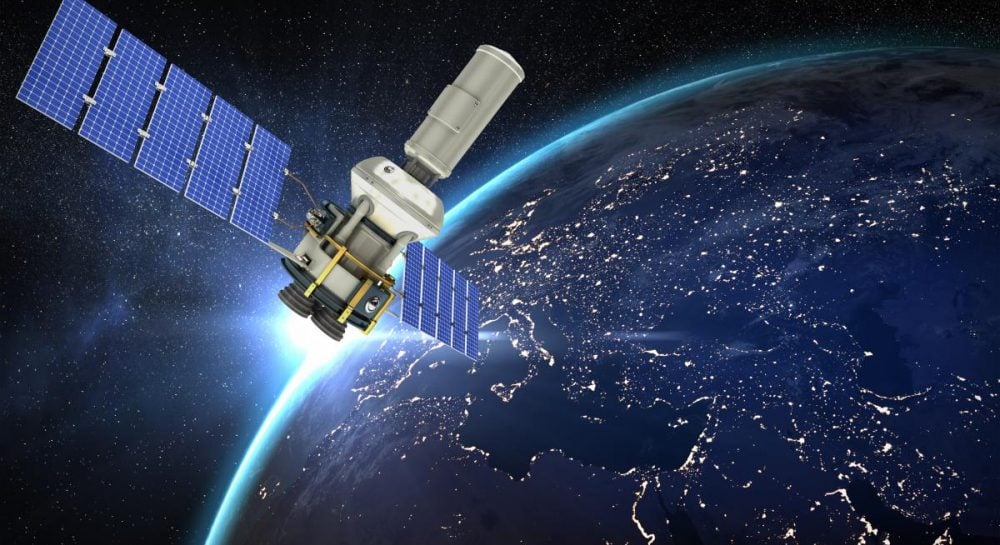
The Ukrainian company HIMERA, in partnership with the Danish company GomSpace, has successfully launched the first test satellite OBRIA NANO into orbit, which will form the foundation of a future independent Ukrainian satellite communications network. This was reported by HIMERA itself.
The satellite was sent into orbit on October 1, 2026, as part of the SpaceX Transporter-18 space mission. HIMERA emphasized that the key goal of the project is to create its own satellite communications infrastructure, which will help diversify Ukrainian communication channels and reduce dependence on foreign systems.
“The next step will be the production of satellites and ground terminals directly in Ukraine. This will contribute to the development of national technologies in the field of space communications and the scaling of industrial capabilities,” the company explained.
Defense Express analysts note that the development of a full-fledged own communications system is a complex and resource-intensive task. That is why Ukraine chose to partner with the Danish GomSpace, which specializes in the production of reconnaissance and communications small satellites, as well as supporting national space programs.
This cooperation opens up prospects for Ukraine to create its own independent satellite communications network.
Cybersecurity expert Kostiantyn Korsun, commenting for Channel 8, emphasized that creating a large-scale national satellite system requires a combination of significant financial resources, technological capabilities, and security guarantees. Currently, such ambitious space programs are implemented by only a few countries — the United States, Russia, China, France, and the United Kingdom.
Korsun noted that implementing a Starlink analogue requires having its own launch vehicles, satellites, and powerful launch complexes. Implementing such a project requires serious investments, highly qualified specialists, and a stable safe territory for a spaceport that would not be under threat of shelling.
So far, Ukraine lacks the appropriate conditions. According to the expert, first of all, the war must end, the economy must recover, internally displaced persons must return, and support from Western specialists must be strengthened.
As an example, Korsun cited Russia, which, having its own rockets and spaceports, launched fewer than 50 satellites into orbit as part of the “Rassvet” project. Currently, their operation provides approximately one hour of communications per day along the front line.
The latest news from the space sector can be learned through Channel 8.

