
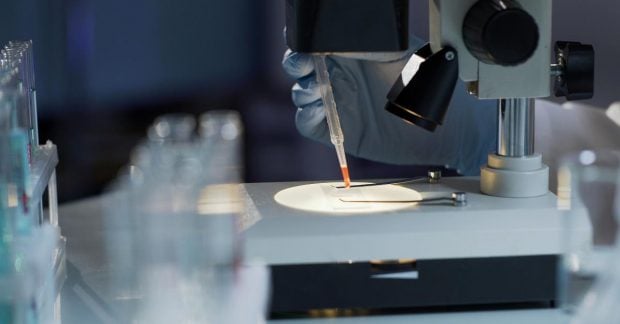
Patients’ own blood can be used to create a material capable of restoring broken bones. During a new study, scientists converted blood into a material that successfully restored bones in animals, reports Independent. Researchers believe that regenerative products can be created from this new material, which will serve as effective means of treating injuries and diseases.
A team of scientists from the School of Pharmacy and Chemical Engineering at the University of Nottingham used special molecules known as peptides that can direct important processes occurring during natural healing to create living materials that stimulate tissue regeneration.
The study leader Alvaro Mata, professor of biomedical engineering and biomaterials, noted: “We decided to try to collaborate with biological processes rather than imitate them. Such a “biocooperative” approach opens new horizons for the development of regenerative materials, enhancing the mechanisms of natural healing”.
Co-author of the study, Dr. Cosimo Ligorio from the University of Nottingham, commented on the possibilities of converting human blood into highly effective implants: “This is truly impressive”. He added that “blood is almost free and can be easily obtained from patients in sufficient quantities”.
“Our goal is to create universal equipment that will allow us to quickly and safely convert patient blood into multifunctional and adaptive regenerative implants”, the scientist emphasized.
In the new study, the team developed a self-organizing system in which synthetic peptides are mixed with the patient’s blood to create a material that uses key molecules, cells, and mechanisms of the natural healing process.
Using this approach, scientists successfully restored bones in animals using their own blood.
A person’s blood type is critically important, and a mismatch of markers during transfusion can have fatal consequences. As noted by the publication Science Alert, in 1972 doctors discovered the absence of a surface molecule normally present in erythrocytes in a pregnant woman. After 50 years, this mysterious phenomenon allowed researchers from the United Kingdom and Israel to describe a new blood group system in humans.

