
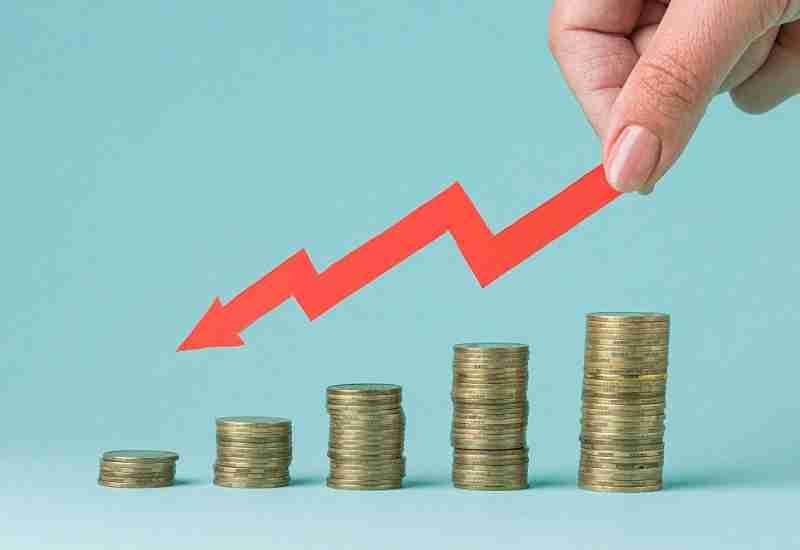
The hryvnia has fallen more than twofold against the dollar over three years — but this is only one figure. In reality, devaluation works more quietly: it steals purchasing power every day, stealthily changing the value of imports, price tags in stores, and the real incomes of households.
What is the hryvnia devaluation and why it is felt
Devaluation is a decrease in the price of the national currency relative to other currencies. Specifically: at the end of 2021, 1 USD ≈ 27 UAH; in spring 2025, 1 USD ≈ 41 UAH. Simple calculations show: more than 50% depreciation over ~3 years. And this is not just statistics — it is a real increase in prices for goods that are imported in dollars or have an import component.
What happens in practice? If a part for equipment cost $50 in 2022 — then it was ≈1350 UAH; in 2025 — ≈2050 UAH. The difference falls on businesses and, ultimately, on the buyer.
Why the currency loses value: briefly and to the point
There are many reasons. Some are purely technical, some are political. Here are the key factors:
- trade imbalance: when imports exceed exports, a currency shortage arises in the market;
- reduction of foreign exchange reserves: if reserves fall, the NBU has fewer instruments for stabilization;
- prices of strategic resources (energy carriers, metals): fluctuations in world markets are quickly transmitted to the exchange rate;
- political risks and debt burden: they reduce the country’s attractiveness to investors.
And one more thing: devaluation is sometimes managerial — the central bank can adjust the exchange rate to help exporters (similar to a subsidy through the exchange rate). This was done in 2015 and 2022 in various countries; the effect can be counterintuitive: exporters win, but consumers lose.
What types of depreciation exist and how they differ
Not every devaluation is the same. Three conditional models that practitioners encounter:
- official (public) — when the exchange rate is adjusted openly with policy explanations;
- latent — a gradual, almost imperceptible fall in the exchange rate, which occurs under market pressure;
- regulated — active interventions by the regulator: buying/selling currency (fx-interventions) to smooth out fluctuations.
Sometimes uncontrolled devaluation occurs due to speculation by large players. According to our observations, such episodes last weeks or months and are accompanied by liquidity spikes.
Socio-economic consequences: who wins, who loses
In short: some win, some lose. The positive is a stimulus for domestic production and exports; the negative is a decline in real incomes, more expensive imported goods, and an increase in external debt.
Micro-case 1. In 2023, a small furniture workshop switched to local suppliers of fittings and increased its margin by 6–8% in 2024. Plus: part of the cost price became less dependent on the exchange rate.
Micro-case 2. In 2022, an electronics importer paid for a batch in USD; after devaluation, it was forced to raise retail prices by 30% within six months — sales fell, and working capital decreased.
Long-term trends and context
World practice shows: countries with sharp devaluation, as a rule, experience a period of high inflation (years 2008, 2014, 2022). IMF methodology and World Bank analytics (field — macroeconomic stabilization) recommend combining monetary and fiscal measures to mitigate the shock.
How to protect savings: practical steps (step by step)
There is no universal recipe, but there is a set of actions that works systematically. I explain why and how.
- Diversify the currency of the portfolio. Why: partial preservation in EUR/USD reduces the risk of complete destruction of purchasing power. Practice: keep 30–50% of savings in “protective” currencies.
- Consider inflation/currency bonds. Why: instruments with indexation protect against loss of real value. How: look for securities with a floating rate or CPI linkage.
- Partially invest in real assets (gold, real estate, commodities). Why: they have intrinsic value and correlate less with the local currency.
- Take care of liquidity. Why: in a crisis, quick access to funds is more important than maximum yield. Recommendation: 3–6 months of expenses in easily accessible reserves.
- Use hedging at the business level (forwards, FX swaps). Why: for companies, this is a way to fix the price of imports and avoid surprises.
Perhaps some of these steps will seem conservative. This is normal. When the exchange rate fluctuates, safe behavior is often higher than risky — especially for households with fixed incomes.
What the state can do — and what to do yourself
The state controls the discount rate, conducts currency interventions, and accumulates reserves. In the short term, this reduces shocks; in the long term, economic diversification and attracting investments are needed. But waiting for government actions is a risk. Therefore, you need to act today.
Start with simple things: check your budget, allocate a reserve fund, review currency risks in contracts. Will it hurt? Maybe. Is it effective — almost always.
According to our observations, those who prepared in advance (diversification, instruments with indexation) lost significantly less during periods of exchange rate spikes. An alternative point of view exists: some economists believe that a controlled exchange rate stimulates exports and, in the long term, restores the balance of payments. It seems the truth is in the middle.

