
Stricter restrictions are being introduced in the Armed Forces of Ukraine for military personnel involved in corruption, to make it more difficult for them to remain in “quiet” positions where they often “wait out” while criminal cases are being considered.
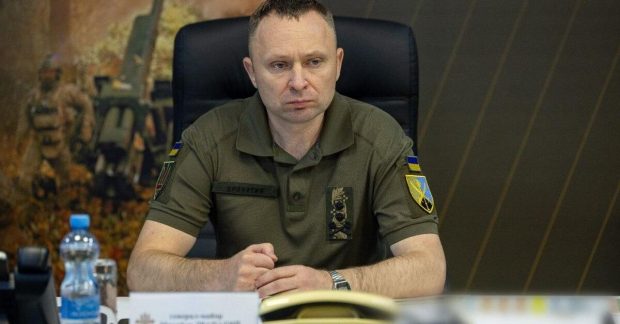
As the publication “Our Money” reports, citing sources in the Armed Forces of Ukraine, on September 7 Commander-in-Chief Mykhailo Drapatyi signed a special order aimed at minimizing corruption risks among military personnel. The document provides that persons involved in corruption crimes should be restricted from holding safe or insignificant positions during a prolonged court process.
The order details personnel restrictions and disciplinary measures regarding military personnel suspected of corrupt acts. The main addressees of the document are the heads of the General Staff, commanders of various branches and types of troops, heads of military administrations, educational institutions, and law enforcement units of the Armed Forces of Ukraine. In total, the decision concerns 48 key officials.
Importantly, the order refers not only to those military personnel who have sentences or court bans on holding positions, but also to individuals whose corrupt actions have not yet been officially proven.
A separate clause regulates the prohibition on assigning military personnel suspected of serious or particularly serious corruption crimes to units until the court proceedings are ongoing. This allows the command to suspend suspects even before the announcement of a guilty verdict.
In addition, even if the court has not deprived them of the right to hold positions, military personnel who have committed corruption violations are subject to disciplinary liability.
Those who already have corruption convictions are offered transfers to positions without managerial or economic functions. Military personnel whose property the court has deemed unjustified and confiscated in favor of the state are planned to be dismissed from service.
Special attention in the order is given to personnel policy in territorial recruitment and social support centers, military medical commissions, and units responsible for procurement. When making decisions in these bodies, it is mandatory to take into account anti-corruption criteria.
Similar requirements also apply to the military law enforcement service, legal and anti-corruption services, as well as internal control structures.
Another important provision is the ban on direct official subordination or official relations between close relatives during military service.
Earlier, according to Channel 8, the Verkhovna Rada Commissioner for Human Rights Dmytro Lubinets reported the emergence of a new type of violations by employees of territorial recruitment centers — the forcible removal of men from private residences.
Later, the ombudsman clarified that in 2024 more than 6 thousand complaints regarding the actions of territorial recruitment and social support centers were received by his office, which already exceeds the figure for the entire year 2023.

