
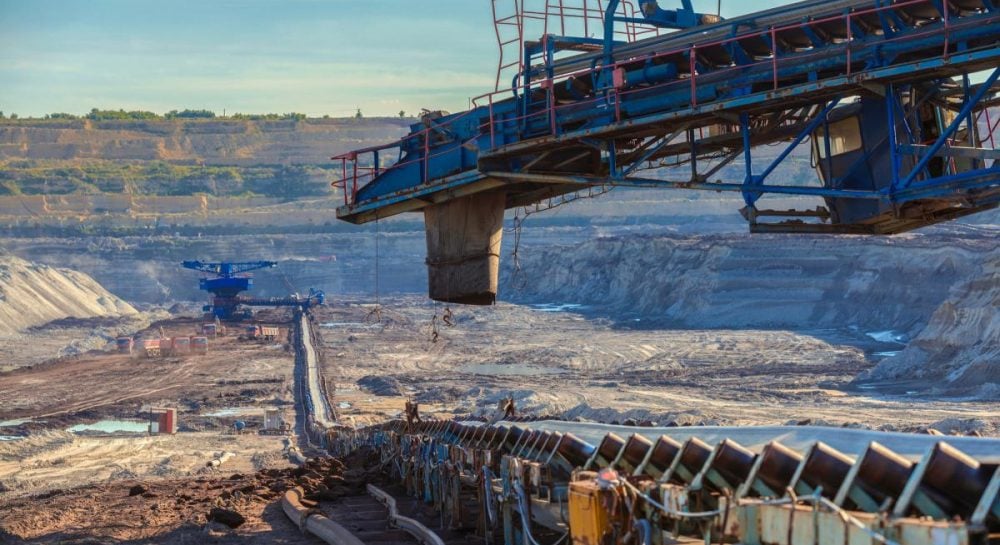
Australian company Sunrise Energy Metals Ltd., owned by billionaire Robert Friedland and supported by the U.S. government, has approved a large-scale rare earth metals mining project. This is reported by Channel 8, citing Bloomberg.
The company plans to begin developing the scandium deposit and the Syerston enrichment plant in New South Wales, Australia. Production launch is scheduled for 2028.
The Syerston deposit is strategically significant due to one of the world’s largest reserves of pure scandium, characterized by a high concentration of the metal suitable for industrial development. Known reserves of pure scandium are estimated at 19,000–23,500 tons, while total ore resources exceed 60 million tons.
In the first phase of the project, Sunrise Energy Metals intends to produce about 60 tons of scandium per year, with the prospect of tripling production capacity. The company has also received long-term debt financing from the U.S. Department of Defense in the amount of up to $400 million.
Scandium is a key metal for the defense industry, high-tech manufacturing, artificial intelligence infrastructure, and wireless technologies. The vast majority of the world’s supply of this raw material currently comes from China.
Sunrise’s document emphasizes that China’s export restrictions on critical minerals, introduced from 2025, would almost lead to the cessation of scandium supplies to key Western markets. This creates an urgent need to diversify metal mining sources to reduce dependence on a single supplier.
Against this backdrop, the U.S. and other leading world economies are actively working to ensure stable supplies of critical minerals for the production of advanced technological products, attempting to reduce China’s influence on global supply chains.
At the same time, Norway is preparing a project to develop the Fensfeltet deposit, which is the largest known rare earth metals deposit in Europe. It is located approximately 150 km southwest of Oslo. Preliminary estimates indicate reserves of about 15.9 million tons of rare earth oxides, including neodymium and praseodymium — important raw materials for the production of powerful magnets in electric vehicles, renewable energy, and the defense sector.
In addition, Western companies are increasingly investing in the extraction of rare earth metals in Brazil, seeking to create an alternative to China’s dominance and reduce the global market’s dependence on this strategically important resource from Beijing.

