
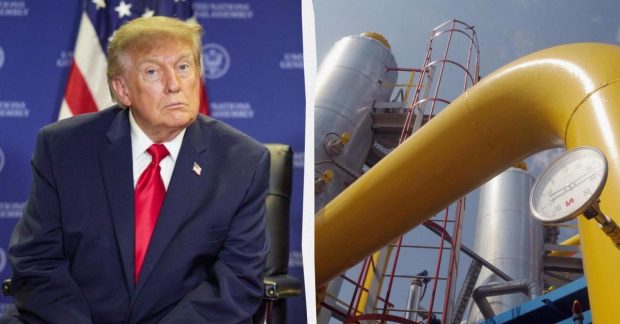
In the office of former US President Donald Trump, a proposal was made for European countries to resume large-scale purchases of Russian gas. According to The New York Times, this initiative is viewed as part of a potential peace agreement to resolve the conflict in Ukraine.
Jared Kushner and Steve Witkoff, advisors to Trump, have been facilitating discussions of this proposal with European and Ukrainian officials, including President Volodymyr Zelenskyy during his visit to Kyiv last month, reports Channel 8 citing its own sources.
The US side is confident that resuming Russian gas supplies through existing pipelines could prompt Moscow to cease military operations on Ukrainian territory, writes The New York Times. However, in Europe the idea was received extremely negatively, as it runs counter to the EU’s long-standing policy of reducing dependence on Russian energy resources.
Trump’s team views this proposal as a possible constructive component of peace negotiations. At the same time, experts warn that resuming Russian gas imports could reduce demand for American liquefied natural gas (LNG) and also strengthen the position of European populists who advocate ending support for Ukraine and restoring relations with Moscow.
Advisors Kushner and Witkoff have in mind a long-term strategy in which the resumption of gas supplies would become part of a larger package of agreements. It could include negotiations on the future status of relations between Russia and NATO, security guarantees for Ukraine, and agreements on control over disputed territories.
Some European and Ukrainian officials suggest that the US may be seeking financial benefits, including a share of profits from Russian gas exports, by involving American business structures or government agencies in the process.
The New York Times notes that although European politicians avoid openly supporting Russian gas, over time public opinion in Europe, as well as in the US, may lean toward cheaper energy resources. At the same time, European officials are aware that this carries significant regional security risks in the long term, due to the possible future cessation of supplies by the Kremlin.
Late last week, Donald Trump signed an executive order rescinding sanctions against Russia that had previously been imposed by law named after the late Senator Lindsey Graham. Under this law, enhanced sanctions were set to take effect this Sunday, aimed at weakening the Russian economy and limiting resources for conducting combat operations in Ukraine. These sanctions also affected the five largest importers of Russian oil and gas.
Previously, Trump lifted sanctions on the supply of Russian diesel fuel. Following these steps, reports emerged about the possibility of easing restrictions for the so-called “shadow fleet” of tankers transporting oil and petroleum products from Russia, Iran, and Venezuela.
All these events are covered by Channel 8, drawing on journalistic investigations and expert commentary.

