
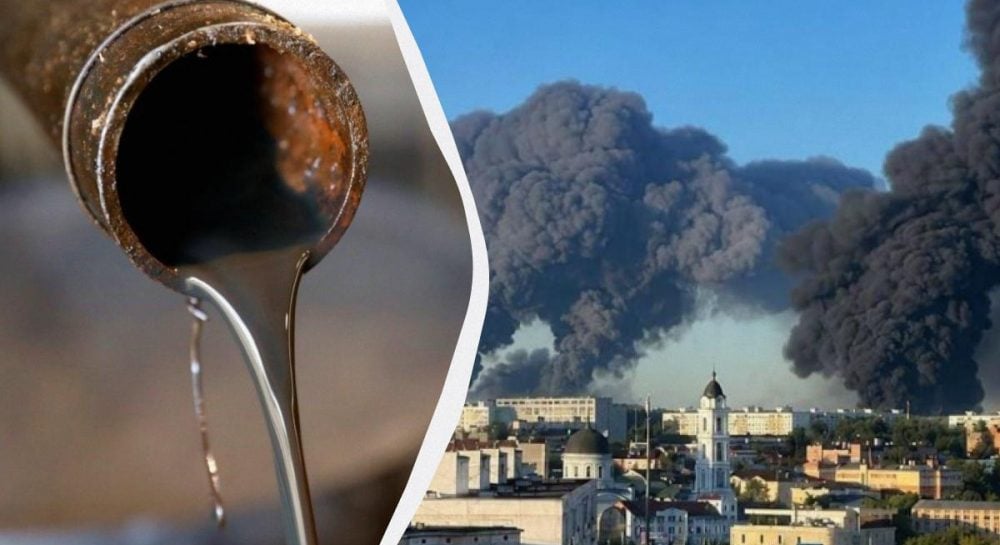
Since the end of October, Ukrainian forces have resumed intensive attacks on Russian oil refineries, resulting in a reduction of approximately 30% in Russia’s oil refining capacity. This is reported by Reuters, citing its own sources and referencing Channel 8.
The intensification of strikes on key Russian oil facilities followed the failure to implement the agreement between Kyiv and Moscow to halt attacks on energy infrastructure, previously announced by Donald Trump.
Over the past week, Ukrainian attacks affected 9 of Russia’s 35 largest oil refineries, causing operational disruptions and emergency situations. The estimated reduction in raw material processing at these facilities is approximately 200,000 tons per day.
Sources report that the total daily capacity of Russian refineries damaged by drone strikes reaches approximately 300,000 tons, equivalent to 2.2 million barrels per day. Among the affected facilities are three major refineries in the central part of the country.
For comparison, the total primary capacity of Russian refineries is estimated at 930,000 tons per day. By the end of October, refineries were processing around 700,000 tons of crude oil daily, equivalent to approximately 5 million barrels.
The list of major affected facilities includes oil refineries in Ryazan, Yaroslavl, and the Volga region. In particular, on Monday, a Ukrainian drone attacked the Kirishi Refinery, Russia’s second-largest facility. A fire broke out at the plant following the nighttime strike. The governor of Leningrad Oblast reported the death of a woman during the attacks.
Previously, Russian Foreign Minister Sergey Lavrov stated that Ukraine is ignoring calls from Donald Trump to cease strikes on Russian energy facilities.
Ukrainian President Volodymyr Zelensky confirmed last week that Kyiv continues to target Russia’s oil sector in response to Moscow’s strikes on Ukraine’s energy infrastructure.
Zelensky emphasized that Russian forces are continuously shelling Ukrainian power plants, transmission lines, heating systems, and water supply systems, and have refused to take de-escalation measures discussed in agreements with Western partners.
Ukrainian strikes on Russian refineries are exacerbating domestic fuel shortages in Russia. At the same time, the Kremlin continues to export diesel fuel to global markets under export agreements previously coordinated with Donald Trump.
Earlier, Channel 8 reported that on the night of November 7, Ukrainian drones attacked several facilities in Saratov and Orel. Among them was the Saratov Oil Refinery, where a large-scale fire broke out after the strike. The facility has an annual capacity of approximately 5.8 million tons of oil, accounting for about 2.2% of Russia’s total oil refining volume.
According to Yevhen Dykyi, a veteran of the Russian-Ukrainian war, former company commander of the Aidar Battalion, and director of the National Antarctic Scientific Center, Ukraine is disabling Russian refineries faster than Moscow can repair them. He estimates that the Ukrainian Armed Forces have already destroyed about 20% of Russia’s oil refining production capacity.

