
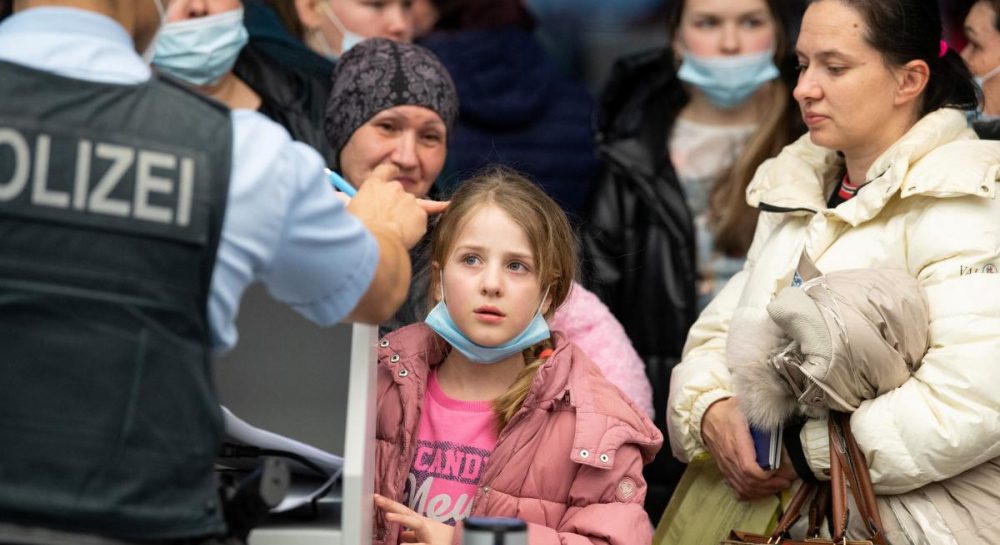
Since Russia’s full-scale invasion, thousands of children from Ukrainian state institutions have been evacuated abroad. Initially, their stay outside the country was planned to be temporary. However, some of them, having adapted to life in European countries, have refused to return home. The Guardian article explores the challenges and fates of these children.
One such child is Denys (name changed for safety). In March 2022, he and over a hundred children from an orphanage in Berdyansk were evacuated to a small village in the Alps, Italy. At first, the 15-year-old boy felt homesick and uncertain. “For me, Ukraine was everything I knew; I had never left my home before,” Denys recalls.
Gradually, the boy began to adapt: he attended the local school, made new friends, and became more accustomed to Italian life. He realized he could have a different future. “I understood that I could live in a world without war and with more opportunities,” the boy says.
After the evacuation, most of the children—those under guardianship or taken from disadvantaged families—ended up in various European countries. Although the Ukrainian authorities tried to bring most of them back, more than 1,500 children remain abroad, and in some cases, local courts, including Italian ones, have supported their right to stay and resisted Kyiv’s demands for repatriation.
A critical case arose in April 2026, when a 15-year-old Ukrainian in Italy was adopted by an Italian family, despite his parents and siblings remaining in Ukraine and wanting to bring the child back. It should be noted that in May 2022, Ukraine suspended international adoptions due to the risks of illegal child removal.
Not all returned children adapted easily in Ukraine. An example is a girl named Evelina, who spent nearly two years with a foster family in Sicily, then was returned home and placed in a family-type orphanage. She says that in the new family, her phone was taken away and for over a year she was forbidden from contacting her Italian guardians.
Now that Evelina has come of age, she plans to move to Europe again. “Many of us who returned still planned to leave after turning 18, because here we cannot be given the opportunities that exist in the EU,” she explains.
Denys’s fate unfolded differently: in August 2024, his group was returned from Italy to Ukraine, despite his fears of mobilization. However, the boy managed to stay in Italy through the courts—he now works as a waiter and plans to continue living there.
According to Ukrainian expert on war crimes against children Kateryna Rashevska, the reluctance of some young people to return creates significant demographic challenges for Ukraine. At the same time, Diego Mosca, coordinator of Ukrainian children in Rota d’Imagna, Italy, emphasizes that the conflict between families in Europe and Ukraine has traumatized the children. He believes that the priority should be the psychological support of the children, not just demographic needs.
According to a Rating Group survey, the majority of Ukrainian refugees in Poland plan to return home—43% after the war ends and 8% in the near future. The greatest desire to return is shown by older people and those with lower incomes.
In contrast, in Germany almost 500,000 Ukrainians receive Bürgergeld social assistance, yet their employment rate is only about 27%. For comparison, in Poland, Lithuania, and the United Kingdom, more than 60–70% of Ukrainian refugees are employed.

