
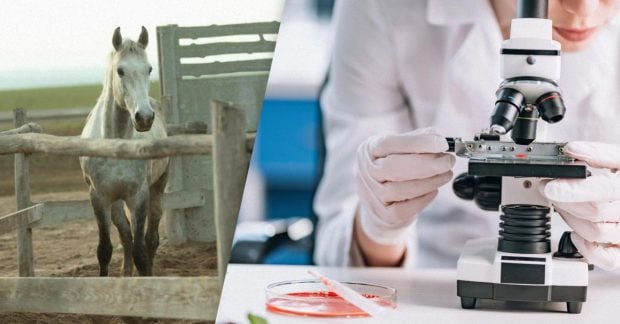
Bird flu can infect horses without visible symptoms, which alarms scientists. In particular, a group of researchers from the University of Glasgow found antibodies to the virus in the blood of horses living in Mongolia. The results of their study were published in the journal Emerging Infectious Diseases.
Professor Pablo Murcia, the lead researcher, stated that this indicates horses in various parts of the world may be susceptible to the disease, especially in areas where avian influenza is prevalent, and could become carriers of the virus to humans. “Now that we know such infections can occur in the natural environment, it is important to monitor them closely to detect them early. Horses, like many other animals, live close to people, and if the virus becomes established among horses, the likelihood of human infection will increase,” warned Murcia.
Researchers from the Centre for Virus Research at the University of Glasgow’s Medical Research Council emphasized that horses could become a “mixing vessel” for new strains of influenza. They noted that horses can already be infected with the H3N8 virus; however, if a horse is simultaneously infected with the H5N1 virus, the viruses could exchange genetic material and mutate rapidly. H5N1 has existed for many years, primarily causing outbreaks among domestic poultry. Recently, a new variant of the virus has spread worldwide with migratory birds and has begun infecting mammals.
Meanwhile, the virus has also been detected among cows in the United States. According to the Centers for Disease Control and Prevention, more than 700 dairy farms in 15 states have already been affected by the infection. Approximately 60 farm workers were infected; however, fortunately, their condition remained stable with mild symptoms.
Scientists are concerned that the virus could develop mutations that would allow it to survive in mammalian hosts, and they criticize the slow response of U.S. authorities. Dr. Tulio de Oliveira, Director of the Centre for Epidemic Response and Innovation in South Africa, who first identified the Omicron variant during the pandemic, expressed his concern while observing the situation in the United States. “They do not need another pathogen that evolves and mutates. If H5N1 continues to circulate among animals and humans for a prolonged period, it creates conditions for a possible outbreak,” he stressed.
In the United States, new rules are being introduced for testing raw milk for the presence of live virus. In the United Kingdom, it has been reported that the likelihood of infection in cattle is very low, so the risk to the population remains limited. However, in an effort to prevent a possible epidemic, 5 million doses of vaccine against H5 family viruses have been ordered.
It is recalled that the WHO has recorded the presence of the deadly virus in three new countries. This refers to the Oropouche virus, which is transmitted to humans through the bites of the midge Culicoides paraensis, which inhabits forested and humid areas. In Congo, in addition, cases of a mysterious disease have been recorded, resulting in the deaths of 67 to 143 people in the Panzi health zone in Kwango Province in the southwest of the country.

